
Guide · 6 min read
Dalat to Mui Ne by motorbike: mountains to the coast
By Motorbike Dalat · · updated
About 160 km on QL20 and QL28B, or two slow days through Di Linh and Bao Loc. Routes, detours to Pongour and Elephant Falls, the sand dunes, and the weather on the way down.
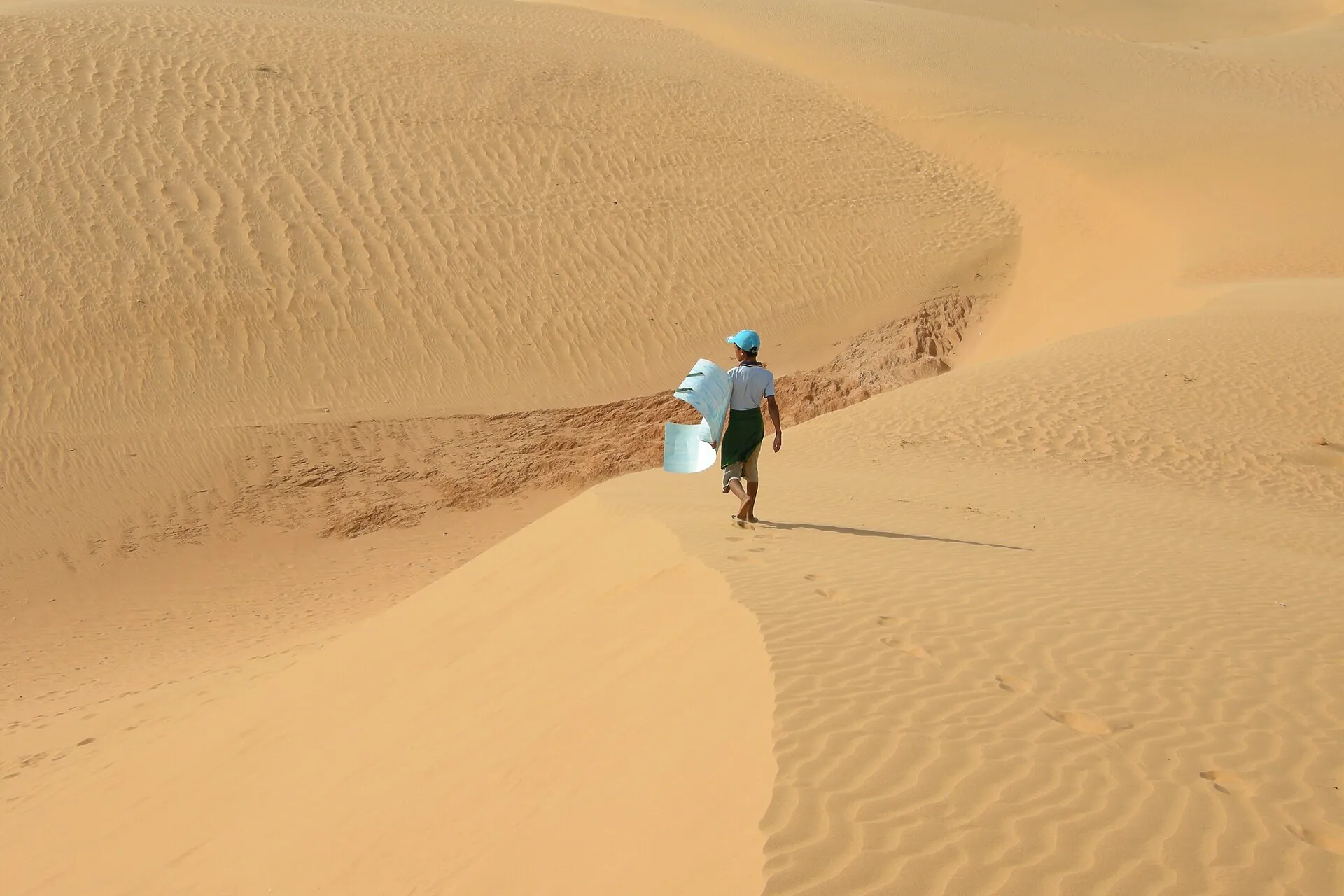
Dalat to Mui Ne is the other classic ride down from the highlands. In a few hours you go from pine forest at around 1,500 m to one of the driest, sunniest stretches of Vietnam's coast, with sand dunes at the end of the road. There is a quick way and a slow way, and both are good.
The route at a glance
- Direct road: QL20 south out of Dalat, then QL28B east down to the coast
- Distance: about 160 km on the direct road
- Riding time: plan a full day — around five hours of riding plus stops
- Slow alternative: via the Di Linh and Bao Loc plateau, two days and roughly 290 km
- Ends at: Mui Ne, just east of Phan Thiet
The direct way: QL20 and QL28B
Leave Dalat heading south on QL20, down past Lien Khuong airport and the market towns of Duc Trong. This part is busy with trucks and buses, so settle in and ride defensively.
South of Duc Trong the road to the coast leaves QL20 and heads east as QL28B. Traffic thins out, and the road crosses the edge of the plateau past the Dai Ninh area before starting a long, winding descent. The landscape changes fast: pine gives way to dry forest and scrub, the air gets warmer with every bend, and the coastal plain opens up below you.
QL28B meets the coastal highway, QL1, near Luong Son. From there you have two choices:
- Via Phan Thiet: follow QL1 south-west to Phan Thiet, then ride out along the coast road to Mui Ne. Simple, but QL1 is a busy trucking route.
- Via the White Sand Dunes: cut across towards the coast near Hoa Thang and come into Mui Ne from the north-east, along the coast road past the White Sand Dunes (Bau Trang). It is quieter and much prettier. Check a map app for the current state of the link roads, or ask us.
Worth a detour on the way
- Pongour Falls. A wide, stepped waterfall a short detour off QL20 south of Duc Trong. It is at its most impressive in and just after the rainy season.
- The Ta Nung Pass and Elephant Falls. Instead of leaving Dalat on QL20, go west over the Ta Nung Pass to Nam Ban, see Elephant Falls and the big Buddha at Linh An Pagoda, then cut back to the main road around Duc Trong. It adds time, but it swaps the busiest part of QL20 for a beautiful back road.
- The top of the descent on QL28B. Before you drop off the plateau, stop somewhere safe to look out over the plain. On a clear day you can see a long way towards the coast.
The slow way: Di Linh, Bao Loc and Da Mi
If you have two days, stay on QL20 past Duc Trong, climb onto the Di Linh plateau with its coffee farms, and carry on to Bao Loc, the heart of Vietnam's tea country. Spend the night there, then drop down towards the coast past the Da Mi reservoir and on to Phan Thiet and Mui Ne.
This is the route our guided Dalat to Mui Ne tour takes: waterfalls and tea hills on day one, the lake and the dunes on day two, about 290 km in all, with you on the back of a local guide-rider's bike. If you would rather ride it yourself, it works just as well as a two-day one-way rental.
Arriving in Mui Ne: the dunes
Mui Ne is a long fishing town strung along the bay east of Phan Thiet. The main sights for riders:
- The Red Sand Dunes, close to Mui Ne village — small, easy to reach, and popular at sunset.
- The White Sand Dunes (Bau Trang) further north-east, much bigger, with a lotus lake nearby. Sunrise here is the reason many people get up at 4 a.m.
- The Fairy Stream (Suoi Tien), a shallow stream you can wade up, between red and white sand banks.
- The fishing harbour, full of round basket boats, best in the early morning.
Do not ride your rental bike on the sand. Road bikes and scooters sink, overheat and fill with sand very quickly. Park at the edge of the dunes; if you want to ride on the sand, local operators run quad bikes and jeeps for exactly that.
Weather and what to wear
The coast around Mui Ne is one of the driest parts of Vietnam, and much hotter than Dalat. Expect strong sun and, roughly from November to April, a steady wind off the sea — the reason Mui Ne is known for kitesurfing. Dalat's rainy season (about May to October) means afternoon showers on the highland part of the ride, so the usual advice applies: leave early and get off the plateau before the afternoon.
Wear layers you can peel off as you descend, long sleeves against the sun, sunscreen on the backs of your hands and neck, and sunglasses for the glare and the sand. Carry plenty of water for the lowland stretch.
After Mui Ne
Mui Ne is a drop-off city for our one-way rentals, so you can leave the bike there. Or keep going: the coast road south past the Ke Ga lighthouse towards Ho Chi Minh City is a fine ride in its own right — it is the second half of our guided Dalat to Saigon coastal tour.
Coming up from the coast: Mui Ne and Phan Thiet to Dalat
The same roads work in reverse, and the climb is the best part: QL28B winds up off the hot coastal plain onto the plateau, the air cools with every bend, and you finish among the pines. From Mui Ne, ride back through Phan Thiet or along the coast road past the White Sand Dunes to pick up QL28B near Luong Son, then turn north on QL20 into Dalat. Plan a full day and aim to be off the upper, cloudier part of the road before the afternoon rain in the wet season.
Without a bike, buses and limousine minivans run between Phan Thiet, Mui Ne and Dalat on the same road; plan on around four to five hours, depending on the stops. Phan Thiet also has a railway station with trains from Ho Chi Minh City, which some travellers combine with the bus up to Dalat — check current timetables, as services on this branch change.
Our rental bikes are picked up at our shop in Dalat, so if you want to ride this road yourself, the one-way trip runs from Dalat down to Mui Ne. Coming from the coast, take the bus up and start riding once you are here.
Riding yourself? You need an International Driving Permit (1968 convention, category A) and your home licence — our IDP guide explains why.
Planning this ride?
Send us your dates and route. We reply with which bike we would give you, and one total price.